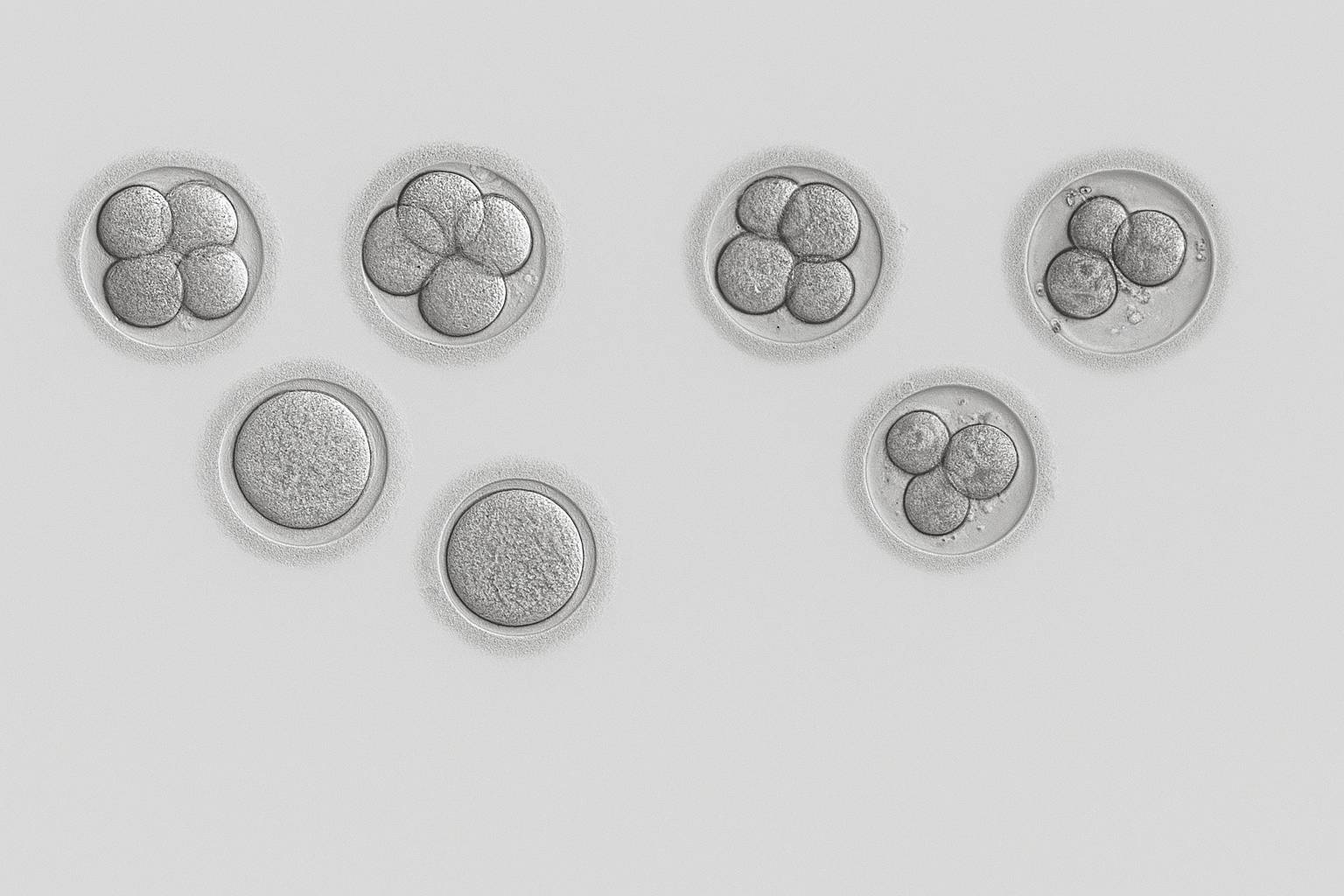
In IVF, one of the hardest realities for both patients and clinicians is this: an embryo can look absolutely “perfect”- and still not lead to a pregnancy.
The embryo may be high quality. The transfer may go smoothly. Hormones look exactly where they should be. And yet…implantation never happens. Or a pregnancy starts, only to end unexpectedly.
For many patients, that’s the hardest part of IVF — how something that looked so promising can still not work out.
The truth is that despite how advanced reproductive medicine has become, implantation and early pregnancy remain some of the least fully understood processes in human biology.
The Embryo Is Only A Piece of the Puzzle
When patients hear the term “good embryo,” it usually refers to how the embryo appears in the lab. Every embryo is assessed using certain grading criteria; think of it almost like a checklist. Is the cell number where we’d expect it to be? Is the embryo developing at the right pace? Do the cells look strong and healthy?
Embryologists look at all these factors together and give the embryo an overall grade.
These assessments are incredibly valuable and are strongly linked to success rates, but they still have limitations. Even the most experienced embryologist can only assess what can be seen or measured in the lab.
An embryo may look excellent under the microscope and still carry biological complexities we cannot detect.
Implantation Is Incredibly Complex
Implantation; when the embryo attaches itself to the lining of the uterus and begins forming a pregnancy, is not a simple “stick.” It is a highly coordinated biological conversation between the embryo and the uterus.
For implantation to work, countless events must come together perfectly. The embryo needs to keep developing properly, the uterus has to be ready to receive it, hormones need to communicate correctly, all in a very narrow window (talk about pressure.)
Even the smallest disruption in this delicate process can change the outcome, including factors we still cannot measure accurately.
A Beautiful Embryo Does Not Always Mean a Healthy Embryo
Even with modern technology, morphology (the way an embryo looks) alone cannot guarantee genetic normality.
Some embryos that look ‘average’ can become healthy pregnancies, while some beautiful-looking embryos may have genetic abnormalities that we simply cannot see during the assessment.
Even PGT-A testing (a type of genetic testing used to check whether an embryo has the correct number of chromosomes before transfer), while incredibly useful, still doesn’t answer every question. It greatly reduces uncertainty, but it cannot eliminate it entirely.
Human reproduction is still incredibly complex — even naturally.
The Uterus Is More Important Than We Once Thought
For years, IVF conversations focused heavily on embryo quality. Today, there is more attention on endometrial health playing a much larger role than we thought.
Researchers are still trying to better understand all the tiny factors that may affect implantation, like the short window where the uterus is most ready to receive an embryo, the bacteria and environment inside the uterus, immune system activity, inflammation, and even subtle changes in the uterine lining that may be invisible on routine scans.
However, many areas remain controversial or not yet fully understood scientifically. In reproductive medicine, there are still far more questions than definitive answers.
Sometimes, We Just Don’t Know Why
This is probably the hardest part for patients to hear.
Not every failed transfer has a clear explanation.
Medicine naturally makes us want answers, reasons, and solutions. But reproductive biology does not always have straightforward answers. Two patients with identical lab results can experience completely different outcomes.
Even in natural conception, many embryos never implant successfully — often before a woman even knows fertilization occurred.
IVF gives us a much closer look into the process, which is incredible, but it also reminds us just how much of human reproduction is still unpredictable and remains outside of our control
The Emotional Weight of “Unexplained” Failure
When patients are told everything looked ‘perfect,’ a failed cycle can feel especially heartbreaking. Was I too stressed? Did I move around too much afterward? Did I do something wrong? Is my body rejecting pregnancy?
But in most cases, the answer is no.
Implantation failure is rarely caused by a single action or mistake or something a patient did or didn’t do. More often, it comes down to just how extraordinarily complex the process of early human development actually is— a process science still cannot fully understand.
What This Means for the Future of IVF
The future of fertility medicine will likely go far beyond simply choosing the “best-looking” embryo. Researchers are now looking at everything from how embryos use energy, to AI-assisted embryo assessment, genetic signaling, immune-system interactions, and even how the uterus responds at a molecular level.
The goal is no longer just creating embryos; it’s understanding why some successfully implant while others, despite looking perfect on paper, do not.
And despite all the incredible progress in IVF, one truth remains very clear: human reproduction is still one of the most intricate and fascinating biological processes in medicine.
Final Thoughts
IVF has come an incredibly long way over the past few decades especially, giving hope to millions of families worldwide. Genetic testing in Abu Dhabi, namely, has undoubtedly elevated our population to higher standards in reproductive health and care. But even with modern technology, there are still limits to what we can fully predict and control.
A “good embryo” can absolutely improve the chances of success, sometimes by a lot, but it is never a guarantee.
Behind every embryo transfer is an extraordinarily complex mix of biology, timing, genetics, and countless tiny factors we are still learning more about every day.
And sometimes, the most honest answer medicine can offer is:
we’re still learning.