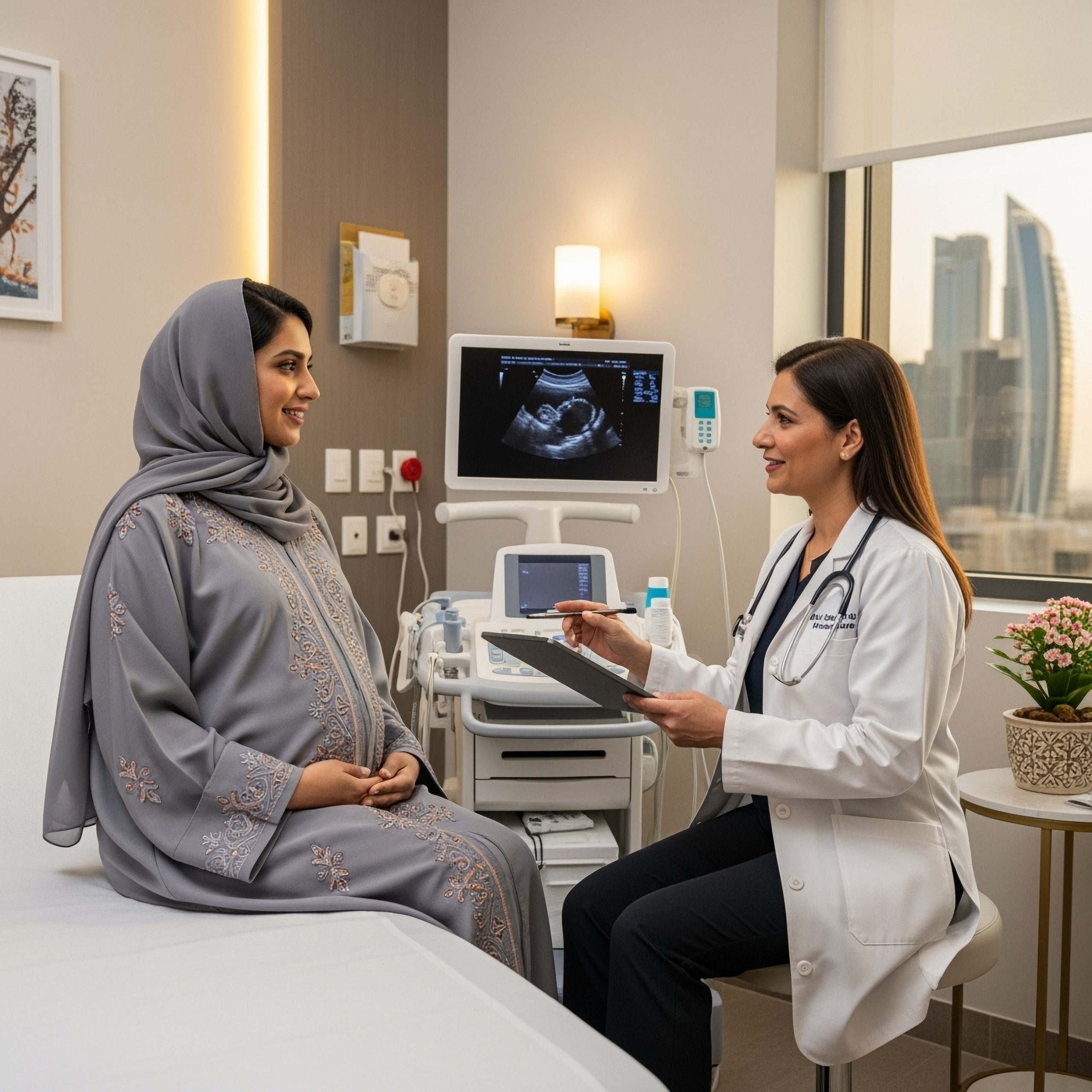
Search for the best fertility doctor in Abu Dhabi, and you will find a long list of names, many of them described as the best by the clinics that employ them. The profiles start to blur after the first few, and none of them answers the question that actually matters, which is whether a particular doctor is right for what is happening to you.
That question has a more useful answer than any ranking. Fertility problems have different causes, and the doctors who treat them have different training. The right choice for a woman with irregular cycles may be the wrong one for a couple where the difficulty lies with sperm, or for someone whose previous treatment did not work. This guide takes the decision in the order that makes sense, beginning with the kind of doctor you need.
Start With the Kind of Doctor You Need
For most women, the first doctor is a gynaecologist, and for many that is exactly right. A general obstetrician and gynaecologist can assess periods, pain and early questions about conceiving, and can arrange the first round of tests.
A fertility specialist goes a step further. Reproductive medicine is a subspecialty that follows training in obstetrics and gynaecology, adding expertise in hormonal disorders, assisted conception and reproductive surgery. On doctor profiles in the UAE, you will usually see it described as reproductive medicine, reproductive endocrinology or infertility (IVF).
Male fertility sits with a different specialist again. An andrologist, usually trained in urology, assesses and treats the male side, and that matters more than many couples realise, because a male factor plays a part in around half of couples who have difficulty conceiving.
When to Move From a Gynaecologist to a Fertility Specialist
Timing is where couples most often lose months, usually by waiting longer than they need to. The American Society for Reproductive Medicine advises starting a fertility evaluation after 12 months of trying for women under 35, after six months for women aged 35 or over, and sooner for women over 40. NICE in the UK also recommends earlier referral for women aged 36 or over.
Age is only part of it. Both bodies advise earlier assessment when there is a known reason for concern. ASRM’s list includes irregular or absent periods and known or suspected endometriosis. It also covers problems with the womb or fallopian tubes, as well as a known or suspected male fertility problem. If one of those applies to you, going straight to a specialist for a proper fertility assessment avoids a round of tests that would lead to the same referral anyway.
Matching the Doctor to Your Situation
Once you know you need a specialist, the next step is matching the specialist to the problem, because fertility doctors do not all focus on the same things.
If your cycles are irregular or hormonal questions keep coming up, look for a doctor whose title and experience sit in reproductive endocrinology. If a scan has shown fibroids or endometriosis, surgical experience becomes important. Whether and how to operate can affect fertility later, and a doctor who regularly performs fertility-enhancing surgery will weigh that decision with future pregnancy in mind.
Where a sperm test has come back with unexpected results, the man should be seen by an andrologist. It helps when that doctor works in the same team as the specialist treating his partner, since both assessments are then read together, which is how most male fertility services are designed to work.
Some situations are less about diagnosis. A woman thinking about egg freezing needs a doctor experienced in fertility preservation who will be straightforward about what freezing can and cannot offer. A couple whose earlier treatment did not succeed needs a doctor willing to review the whole history before suggesting what to change.
What the Title on a Doctor’s Profile Tells You
Doctors in the UAE practise under professional titles set by the Unified Healthcare Professional Qualification Requirements. These are issued jointly by the Ministry of Health and Prevention, the Department of Health in Abu Dhabi, the Dubai Health Authority and the Sharjah Health Authority, and the two titles you will see most often on specialist profiles are Specialist and Consultant.
Both hold a recognised qualification in their specialty. The Consultant title additionally requires a set number of years of experience after that qualification, so it signals a longer record at that level. It does not make a Consultant automatically the better choice for you. A Specialist whose daily work matches your problem can be a closer fit than a Consultant whose focus lies elsewhere.
Checking a licence takes a few minutes. The Department of Health publishes a Find a Medical Professional tool for doctors in Abu Dhabi, and the Dubai Health Authority offers a registration status check by licence number for doctors practising in Dubai. The clinic needs its own licence too, which the Department of Health lets you look up by facility licence number.
What a Good First Consultation Feels Like
Credentials narrow the list. The first consultation is where you find out whether the doctor is right for you, and a few things are worth noticing while you are in the room.
A good fertility doctor takes a full history before offering opinions, and asks about your partner as well as about you. Reasoning should be explained in plain language, including why one test or treatment is being suggested over another. Listen, too, for honesty about what is not yet known. No doctor can promise a pregnancy, and one who seems to is telling you something important.
Practical fit counts as well. It helps to be able to speak with your doctor in the language you are most comfortable using, and to know whether you will see the same doctor throughout treatment. Online reviews and ratings sites can tell you a good deal about waiting times and bedside manner, which are worth knowing. What they cannot tell you is whether a doctor’s expertise matches your diagnosis.
You Can Always Ask for a Second Opinion
Choosing a doctor is not a decision you are locked into, and in Abu Dhabi that is written into patients’ rights. The Department of Health’s patient rights policy includes the right to a second opinion, or to have care transferred to another physician, if a patient is not satisfied with the care or opinion provided. The same policy gives patients the right to a detailed explanation of their condition and treatment in terms free from professional jargon.
A good doctor will not take a request for a second opinion personally. For couples who have had treatment elsewhere that did not work, a fresh review is often the most useful appointment they can make.
Where Trust Fertility Fits
Trust Fertility is a DOH-licensed fertility clinic (licence MF7820) inside Burjeel Medical City in Mohamed Bin Zayed City, Abu Dhabi, and part of the Burjeel Holdings healthcare network. Its doctors cover the different parts of fertility care described above, which means a couple can be assessed and treated within one team.
Reproductive medicine is led by Dr. Walid Reda Sayed, Consultant Reproductive Endocrinologist and Infertility (IVF) and Group Medical Director, with more than 30 years of experience. Prof. Ahmed Elbohoty, Consultant in Reproductive Medicine (IVF) and Gynaecology, has particular experience in minimally invasive and hysteroscopic surgery. Dr. Hala Gomaa and Dr. Nayrouz Gezaf are specialists in reproductive medicine and infertility, Dr. Amani Kanan is a specialist in obstetrics and gynaecology with a focus on assisted reproduction, and Dr. Ahmad Allam is a specialist in urology and andrology. Between them, the doctors consult in several languages, including Arabic, English, German and Russian.
Every situation is different. The purpose of the first appointment is to work out which of those doctors is the right one for yours.
Take the Next Step
If you are not sure which kind of doctor you need, you do not have to work it out alone before booking. A first consultation is the place to describe what has been happening and be pointed to the right specialist.
Speak to a fertility specialist at Trust Fertility, or book a consultation to meet the team and talk through your situation. Every situation is different, and the right plan starts with understanding yours.
Frequently Asked Questions
1. Who is the best fertility doctor in Abu Dhabi?
There is no single answer, because the best fertility doctor in Abu Dhabi for one couple may not be the best for another. Look for a DOH-licensed doctor whose training and daily work match your situation, for example reproductive endocrinology for hormonal problems, reproductive surgery for fibroids or endometriosis, or andrology for male fertility, and who explains their reasoning clearly.
2. How do I choose the best gynecologist in Abu Dhabi if I am trying to conceive?
A general gynaecologist is a sensible first doctor for early questions and first tests. ASRM advises a fertility evaluation after 12 months of trying for women under 35, after six months for women aged 35 or over, and sooner for women over 40 or where there is a known concern such as irregular periods or endometriosis. At that point, a fertility specialist is usually the better choice.
3. How can I check a doctor’s licence in Abu Dhabi?
The Department of Health Abu Dhabi publishes a Find a Medical Professional tool for doctors licensed in the emirate, and a separate search by facility licence number for clinics. For doctors in Dubai, the Dubai Health Authority offers a registration status check using the doctor’s licence number.
4, What is the difference between a Specialist and a Consultant in the UAE?
Both titles are set by the UAE’s unified professional qualification requirements, and both hold a recognised specialty qualification. The Consultant title also requires a set number of years of experience after that qualification. The more important question is whether the doctor’s focus matches your situation.