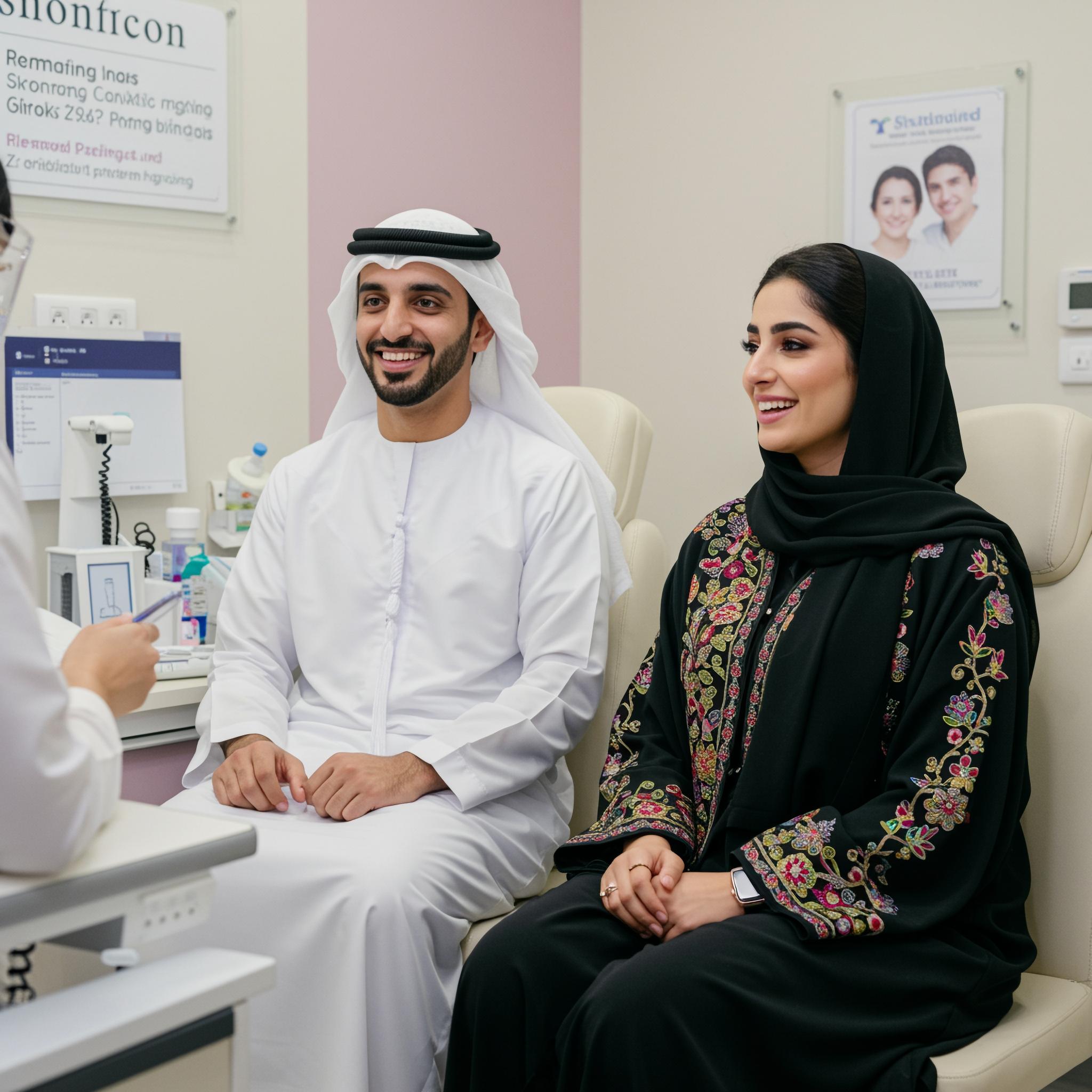
Not every couple who walks into a fertility clinic needs IVF, and not every couple is ready for it. Intrauterine insemination sits in the space between trying naturally and committing to a full IVF cycle, which is why so many couples meet it first.
It is a shorter, lighter treatment, and it suits some situations far better than others. This guide covers what IUI involves, who it genuinely helps, how many attempts are usually reasonable, and what separates a centre worth trusting from one that simply offers it.
What Intrauterine Insemination Actually Is
The idea behind IUI is to shorten the distance sperm have to travel, and to improve the quality of what sets off.
A semen sample is prepared in the laboratory, a process that concentrates the healthiest, most active sperm into a small volume. That prepared sample is then placed directly into the womb through a fine catheter, timed to the moment you ovulate. Fertilisation still has to happen naturally inside the fallopian tube, which is the key difference from IVF, where fertilisation happens in the laboratory. Under UAE law, assisted reproduction uses the couple’s own eggs and sperm, so an IUI cycle here uses the husband’s prepared sample.
How an IUI Cycle Works
The whole cycle usually fits inside a few weeks, and most of it is monitoring rather than treatment.
It starts with tracking your cycle, using ultrasound and hormone tests to see when you are approaching ovulation. Some cycles are entirely natural and others use medication to stimulate the ovaries gently, which is a decision your specialist makes with you. When the timing is right, your partner provides a sample, the laboratory prepares it, and the insemination itself takes a few minutes in a clinic room. There is no sedation and no recovery to speak of, and you go home afterwards. A pregnancy test follows about two weeks later.
Compared with the stimulation, egg collection and laboratory work of an IVF cycle, it is a much smaller undertaking, physically and emotionally.
Who IUI Suits, and Who It Does Not
This is where couples are most often misled, because IUI only works if the basic conditions are in place.
Two things have to be true. At least one fallopian tube must be open, since fertilisation still happens there, and the prepared sperm sample has to be adequate. That is why a tubal assessment and a semen analysis come before any discussion of IUI, not after it. Where tubes are blocked or the sperm problem is significant, IUI is not the right treatment, and offering it anyway simply costs you time.
Where it does fit, the common situations are unexplained infertility, problems with ovulation that respond to gentle stimulation, and difficulties with intercourse that make conception unlikely without help. European guidance recommends insemination with gentle ovarian stimulation as a first-line treatment for couples with unexplained infertility, which is the evidence behind the idea that it is worth trying first.
The Stimulation Question, and the Risk Attached to It
Adding medication to an IUI cycle raises the chance of success, and it introduces the one serious risk in an otherwise gentle treatment.
Stimulating the ovaries can lead to more than one egg being released, and with sperm already placed in the womb, that means a real chance of twins or more. A multiple pregnancy carries higher risks for both mother and babies, which is why European guidance is explicit that gonadotrophin medication should be used only at low dose with adequate monitoring, to avoid multiple pregnancy and ovarian hyperstimulation. In practice, a careful clinic will cancel or convert a cycle when the scan shows too many follicles developing. If a centre never mentions cancellation criteria to you, ask about them.
How Many Cycles Before Moving On
IUI is a numbers game played over a small number of attempts, and knowing the usual limit protects you.
Most of the chance of success sits in the first few cycles, and guidance in the UK now describes considering up to four stimulated insemination cycles before IVF, or moving to IVF directly. European guidance takes a prognosis-based view instead, advising that the decision to start active treatment be based on factors such as age, how long you have been trying, and any previous treatment or pregnancies. The common thread is that repeating IUI indefinitely is not a plan. Agree a review point before you start, so that the decision to continue or to change course is made deliberately.
It is also worth saying plainly that IUI has a lower chance of success per cycle than IVF. For the right couple it is a reasonable, lower-intensity first step. For the wrong couple it is a delay.
How to Judge an IUI Centre
Couples searching for the best IUI centre in Dubai are really asking a quality question, and it is answerable with a handful of specifics.
Ask whether the centre assesses both partners before recommending IUI, and insist on the tubal and sperm results being discussed with you. Ask how cycles are monitored and what the cancellation criteria are for too many follicles. Ask how many cycles the centre would suggest before reviewing the plan, and what the itemised cost covers, including medication and the laboratory preparation. Ask who performs the sperm preparation, because that laboratory step is the part of IUI most likely to vary between clinics. A centre that answers all of that without hesitation is telling you something useful about itself.
IUI in Dubai or Abu Dhabi
Fertility care is regulated in both emirates, by the Dubai Health Authority (DHA) in Dubai and the Department of Health (DOH) in Abu Dhabi, and insemination is among the medically assisted reproduction techniques defined in UAE federal regulations. As with all assisted reproduction in the country, treatment is provided to married couples using their own eggs and sperm, with the written consent of both spouses.
For a couple comparing IUI treatment in Dubai with a centre in Abu Dhabi, the practical question is the monitoring. An IUI cycle involves several short scan appointments timed to your cycle, so the drive matters more here than it would for a one-off test. Mohamed Bin Zayed City is around 60 to 90 minutes from Dubai, which many couples manage comfortably, particularly when the scans can be booked early in the day.
Where Trust Fertility Fits
Trust Fertility is a DOH-licensed fertility centre (licence MF7820) inside Burjeel Medical City in Mohamed Bin Zayed City, Abu Dhabi, and part of the Burjeel Holdings healthcare network. Intrauterine insemination is offered alongside IVF, ICSI and fertility preservation, with ovulation tracked by ultrasound and hormone tests and the sample prepared in the clinic’s own laboratory, led by Dr. Irfan Aslam, Group IVF Laboratory Director. The reproductive medicine programme is led by Dr. Walid Reda Sayed, Consultant Reproductive Endocrinologist and Group Medical Director.
The sequence that protects you is assessment first, then a recommendation that fits what the tests show, whether that turns out to be IUI or something else. Every situation is different, and the simpler treatment is only the better one when it suits your situation.
Take the Next Step
If IUI is on the table, the questions that matter are whether your tubes are open, whether the sperm sample supports it, and how many cycles you would try before reviewing the plan.
Speak to a fertility specialist at Trust Fertility, or book a consultation to find out whether insemination is the right starting point for you. Every situation is different, and the right plan starts with understanding yours.
Frequently Asked Questions
1. What is intrauterine insemination?
IUI is a treatment in which a prepared semen sample is placed directly into the womb through a fine catheter, timed to ovulation. The laboratory concentrates the most active sperm first. Fertilisation still happens naturally in the fallopian tube, which is the main difference from IVF.
2. Who is IUI suitable for?
It requires at least one open fallopian tube and an adequate prepared sperm sample. Within those limits it is commonly used for unexplained infertility, for ovulation problems that respond to gentle stimulation, and where intercourse is difficult. European guidance recommends insemination with ovarian stimulation as a first-line treatment for unexplained infertility.
3. How many cycles of IUI should we try?
Most of the chance sits in the first few attempts. UK guidance describes considering up to four stimulated cycles before IVF, while European guidance bases the decision on prognosis, including age, how long you have been trying and previous treatment. Agree a review point with your specialist before starting.
4. How do we choose the best IUI centre in Dubai or Abu Dhabi?
Look for a centre that assesses both partners before recommending IUI, explains your tubal and sperm results, monitors cycles with clear cancellation criteria for too many follicles, gives an itemised cost, and agrees a review point with you. Clinics are licensed by the DHA in Dubai and the DOH in Abu Dhabi.